
Universities are built around qualifications. To lecture, people usually need degrees. To train lecturers, the expectations are even higher: a master’s degree, often a PhD, publications, academic titles, and years of being recognized by the system. Jesca Nayebare came with a different kind of evidence.
She is 24 years old, a SINA alumna, and co-founder of FarmPlus. In the language many institutions still use to sort people, she is a high school dropout. Her formal education ended early. But the learning did not stop there. At SINA, she overcame the label and limiting believes and learned by building. At SINA, Jesca did not learn entrepreneurship as a chapter in a course. She learned it while building FarmPlus. Finding out what farmers actually needed. Testing whether her livestock feed idea could work. Explaining it to people who had no reason to believe her yet. Adjusting when something was unclear, too expensive, or not useful enough. That kind of learning gives someone a different authority in the room.
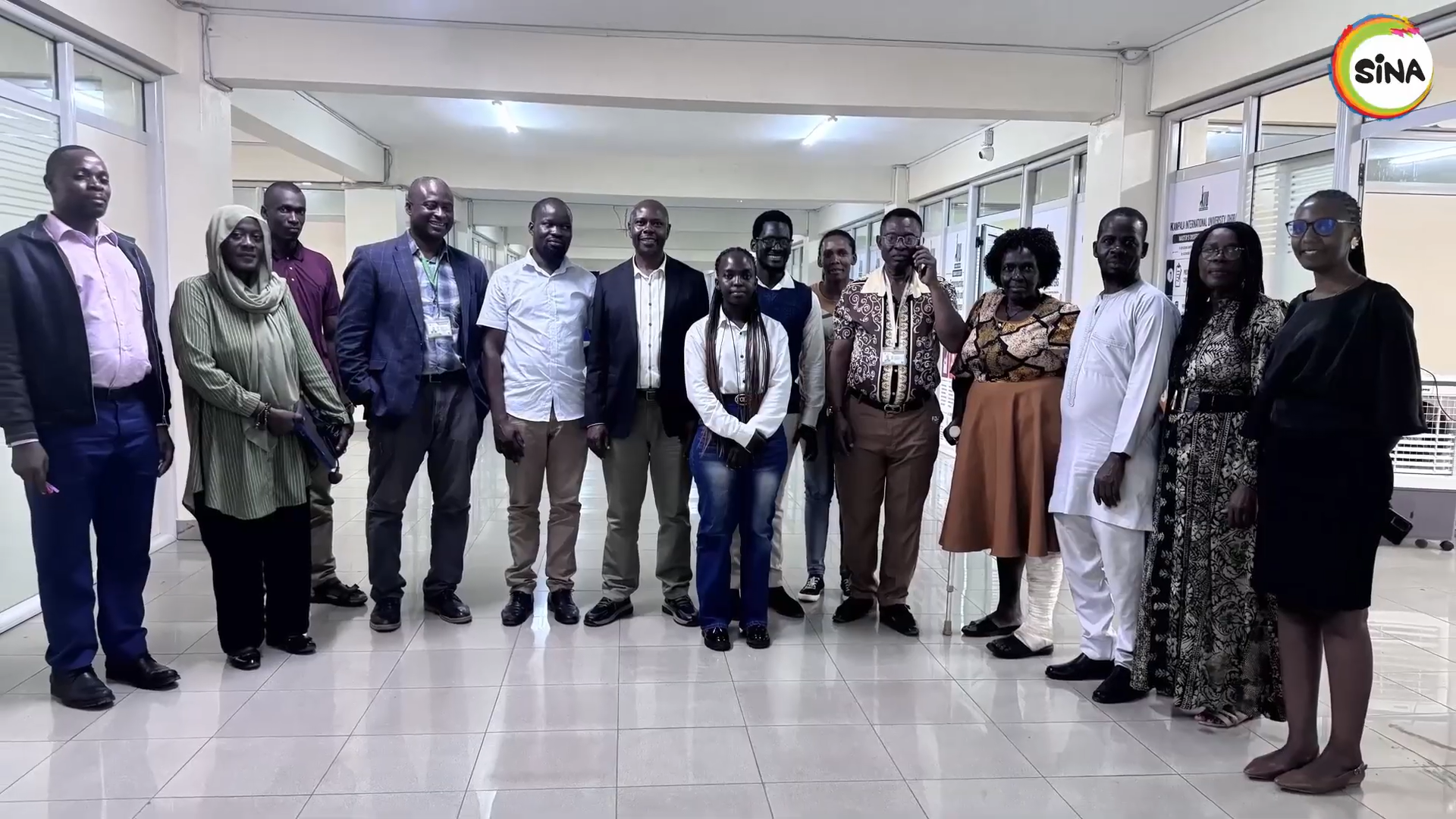
This is why Kampala International University (KIU) invited her. In August 2026, Jesca and Charles Busuulwa, another SINA alumnus and social enterprise co-founder of She Deserves, facilitated core sessions at the three-day Training of Trainers with KIU lecturers. The training asked a question that many universities are now facing with increasing urgency: How do we move from teaching entrepreneurship to helping students actually become entrepreneurs?
For SINA, this is our daily work. We work with young people from disadvantaged backgrounds who have often been pushed out of formal education, employment, and the places where decisions are made. Some have been told directly or indirectly that they are behind, unqualified, difficult, or a burden. In many aid systems, they are expected to receive. In many education systems, they are expected to first prove themselves on paper before they are trusted with responsibility.
SINA works from another starting point. We give responsibility early. Scholars run their SINA Communities. They manage food, money, trainings, logistics, marketing, conflicts, and the small pieces of daily life that become very real when a community depends on them. A missed budget line can mean there is not enough for lunch for everyone. This is not clean learning and SINA scholars set their own curriculum based on the roles they choose which help them get to where they want to be in the future and gain the skills and experiences needed to build a social enterprise later.
Often scholars arrive with fear, habits of survival, and wounds that do not disappear because a program begins. Some ideas fail after weeks of effort. Some teams form and fall apart. And still, this is where leadership starts. In SINA, young people do not wait until someone declares them ready. They take roles, make decisions, face consequences, and learn how to repair when things go wrong. Over time, the same person who once sat quietly in a session may facilitate the next cohort. The one who was afraid to speak may become the person holding a team through a difficult decision. The scholar becomes a trainer. The trainer becomes a founder. The founder becomes someone others can learn from.
Jesca brought that reality into KIU. During the training, she shared the journey of FarmPlus and the practical steps of moving from a problem to a tested solution. One participant reflected that her presentation on livestock feed helped him see how his own ideas could become possible. He had been carrying them in his mind, but did not know how to bring them out. After seeing the early stages, the confusion, and the practical steps, the distance between idea and action became smaller. This is what practice can do inside education.
Professor Regina, Deputy Vice Chancellor for Research, Innovation, Consultancy and Extension at Kampala International University, connected the training to Uganda’s wider shift away from rote learning and towards competency-based education. Her reflection was clear: people can learn, but they also need to practice. Entrepreneurship does not begin with titles. It begins with identifying a problem and making a serious effort to solve it.
That is why this moment matters beyond one workshop. In June 2026, SINA and Kampala International University signed a Memorandum of Understanding to collaborate on research, documentation, experiential learning, competency-based education, mentorship, internships, and social innovation. The agreement also opens space for SINA practitioners to contribute as guest facilitators, visiting lecturers, and co-supervisors for student projects. The Training of Trainers was one of the first visible steps.
More will come from this partnership. We are exploring how the SINA Framework can support KIU and other institutions to make entrepreneurship education more practical, more connected to real problems, and more honest about what it takes to build. We are also open to further engagements with universities, training institutions, NGOs, government bodies, and partners who want to experience or adapt parts of the SINA Framework. This can happen online or in person through guest sessions, Training of Trainers programs, immersion visits to SINA Communities, research collaboration, or deeper institutional partnerships.
Reach out at info@socialinnovationacademy.org to talk further or subscribe to our newsletter to get quarterly updates.