Most schools teach you to follow instructions. We do the opposite.
A SINA Community has no teachers and no boss. We run it ourselves: the budget, the training, who joins next. We call it freesponsibility, the freedom to decide paired with the responsibility for what happens. It sounds chaotic. It has worked for over a decade.
We organize ourselves. No managers, no hierarchy. Scholars hold real roles, from finance to intake, and hold each other to them. We build real enterprises. Over 150 social enterprises have started here, in health, water, recycling, and agriculture. Helping real customers while creating real jobs. We pass it on. The model spreads by itself, so far into 24 communities across 9 countries, carried by the people it served.
We organize ourselves. No managers, no hierarchy. Scholars hold real roles, from finance to intake, and hold each other to them.
We build real enterprises. Over 150 social enterprises have started here, in health, water, recycling, and agriculture. Helping real customers while creating real jobs.
We pass it on. The model spreads by itself, so far into 24 communities across 9 countries, carried by the people it served.
How it works in Detail
We pioneer regenerative communities for a freesponsible world. Every individual can rise to their fullest potentials regardless of background. Our changemaker-maker model empowers Africa’s youth, especially those from challenging backgrounds, to become the change they want to see in the world. With SINAs sprouting across Africa through a self-organized replication approach, the role of disadvantaged youth is reversed from passive recipients of aid to active drivers of their own future, one community at a time. By taking on responsibilities and roles to run SINA, youth create their own curriculum, gain relevant skills, and create social enterprises while leveraging existing strengths to turn challenges into opportunities. An entire generation takes purpose-aligned action and creates a future for themselves in Africa.
The Social Problem
Unemployment stands at the heart of hopelessness amongst youth in Africa. With the youth population expected to double by 2050, young people lack opportunities and prospects, which fuels instability and perpetuates poverty. In Uganda alone, an estimated 700,000 new entrants join the labor market each year to compete for only 12.000 available formal jobs and it is not uncommon that one formal job announcement attracts over 2.000 applicants. The lack of economic opportunity, together with violent conflicts and effects of the climate crises have led to 44 million refugees and displaced people in Africa (see: UNHCR).
Our Solution
“When a flower doesn’t bloom, you fix the environment in which it grows, not the flower.”
―Alexander den Heijer
SINA transforms disadvantaged youth into social entrepreneurs through a cost-effective and freesponsible community approach. SINA unleashes and nurtures the intrinsic drive within each of its “scholars.” Tailor-made empowerment stages and self-management processes support scholars to define their own path and put the power of education in their own hands. Enabled as changemakers, scholars often turn challenges into opportunities to make a sustainable living out of what they are passionate about.
The SINA model is creating resilient and self-reliant communities establishing their own solutions instead of waiting for support from the outside. Since the solutions become social enterprises, they are independent of donations and often tackle challenges at their roots.
Scaling SINA
“You never change things by fighting the existing reality. To change something, build a new model that makes the existing model obsolete.” ―R. Buckminster Fuller
SINA is living the world we want to see around us. We are setting examples of a different system where everyone is powerful and can pursue their dreams and create a prosperous and dignified life. The SINA model is becoming a movement beyond empowerment and makes everyone a leader and follower at the same time. It intrinsically motivates all members with full ownership of their destinies. The results are remarkable if we let people create their own solutions and distribute power into their own hands and lead to jobs created and a pathway to self-reliance through social entrepreneurship.
SINA’s model fosters systemic change as the roles of disadvantaged youth and communities change from dependency to self-reliance. Through a self-organized replication approach, we scale the impact and reverse the role of disadvantaged youth from passive recipients of aid to active drivers of their own future from 12 SINAs in 2023 to 1.000 SINAs in 2033.
Theory of Change
Every individual can rise to their fullest potentials regardless of background. SINAs changemaker-maker model enables Africa’s youth, especially those from challenging backgrounds, to become the change they want to see in the world as social entrepreneurs.
Regenerative and Scalable
SINA transforms communities into places where everyone is powerful and can pursue their dreams and create a prosperous and dignified life. With this, SINA’s regenerative and freesponsible movement for self-reliance and collective systemic change contributes to a world that works for everyone.
Beyond Aid
Like caterpillars unable to imagine they can transform and fly, disadvantaged youth and refugees discover their purpose and become social entrepreneurs while leveraging existing strengths to turn challenges into opportunities. The role of disadvantaged youth is reversed from passive recipients of aid to active drivers of their own future, one community at a time.
Founding Story
SINA’s story goes back to 2006. Etienne Salborn finished high school in Germany, and instead of joining the back-then-obligatory military service, he volunteered for one year in the Kankobe Orphanage in Uganda.
One day, a girl in the orphanage asked him for help. She was afraid about her future because she was finishing primary education but did not know what would happen after. She wanted to continue schooling in a secondary school but had no one to support her despite good grades. Etienne realized that almost all the children were in the same position as her. Most children had no chance to continue their educations and were on their own at a young age.
Etienne started to convince family and friends to cover school fees for secondary education in boarding schools. An educational sponsorship program was born. Because it grew by about twelve new children being sponsored yearly, in 2009, Etienne founded Jangu e.V. as a non-profit organization to manage the sponsorship program professionally.
Over the years, he regularly returned to Uganda to care for the project, the sponsored children, and the young adults many had become. The first generation of the sponsored youth finished their Advanced (A)-Levels Examinations in November 2013. Many had gone from believing they had little chance in society to being empowered through education. Nevertheless, they could not join university because of too high tuition fees and could not find employment due to the high youth unemployment in Uganda.
The initial goal of sponsoring the children until they would be self-sustainable was yet to be achieved. Etienne returned to Uganda to dedicate his master’s thesis in “Peace, Development, Security and International Conflict Transformation” to understand the challenges of the Ugandan educational system and look for solutions. In an Open Space Dialogue between the first generation of Jangu e.V. graduates and the students about to finish high school, a solution emerged: a space where the youths would create their own jobs if no jobs were available. The idea of SINA was born. Here is Etienne’s Master Thesis, which laid also an academic foundation to the creation of SINA.
The inaugural SINA Community (called “Jangu International“) was brought to life in 2014 and 2015 through a joint effort of Etienne Salborn, the alumni of Jangu e.V, Ugandan facilitators, and experts from around the world, including Philipp Mäntele. In co-creation, all together develop and live the SINA Framework, with its freesponsible culture and self-organized empowerment concept.
Here is a video from the early days of 2015/ 2016:
SINA Framework
Freesponsibility
We believe in the balance of freedom and responsibility, a concept we call freesponsibility. Scholars have the autonomy to make decisions but are accountable for the outcomes. The more responsibility a scholar in SINA takes, the more freedom he or she gains and scholar build their own curricula based on the roles and responsibilities taken over.
Self-organized, Progressive and “Teal”
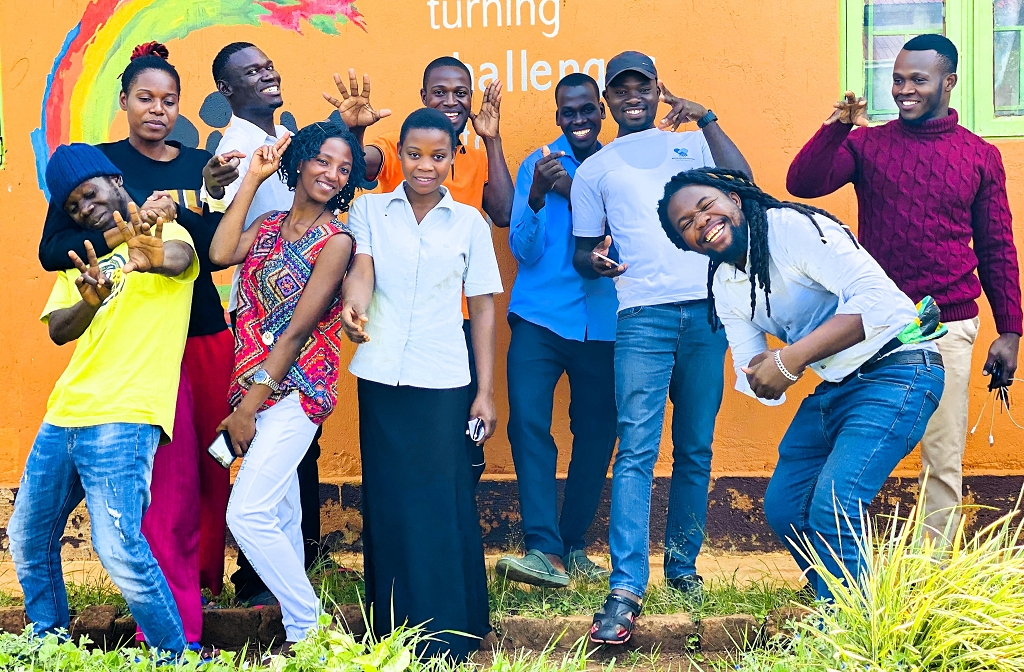
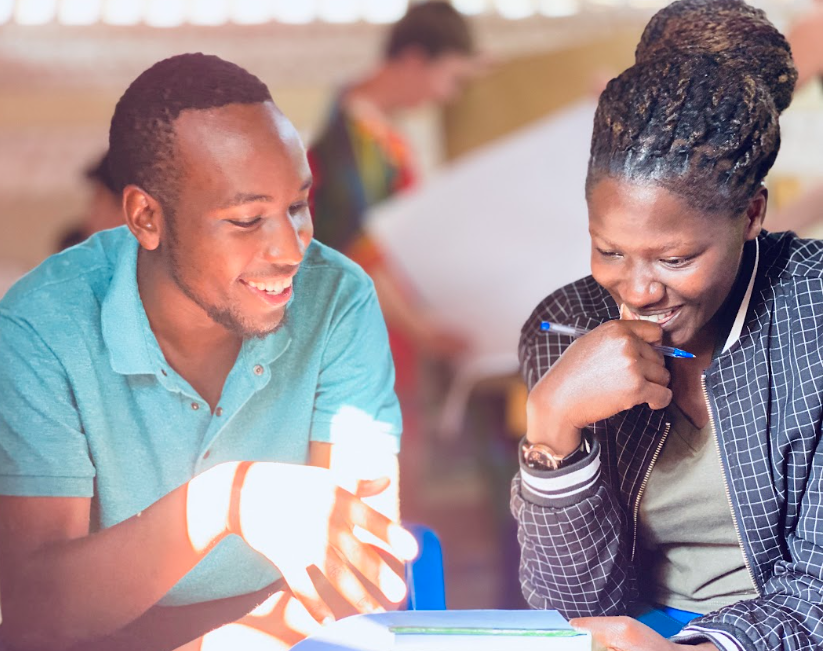
We embrace the Teal organizational model, where self-management replaces traditional hierarchies. Scholars take on roles within the community and lead their own projects, creating a dynamic and collaborative learning environment. This progressive approach encourages personal empowerment, innovation, and adaptability, allowing individuals to grow as leaders while pursuing their unique paths.
Regeneration
Our model is regenerative. It nurtures continual personal and community growth and improvements. Rather than being a static or one-time intervention, SINA communities evolve and adapt over time, revitalizing their surroundings and enabling a regenerative cycle of social impact.
A Community Ecosystem
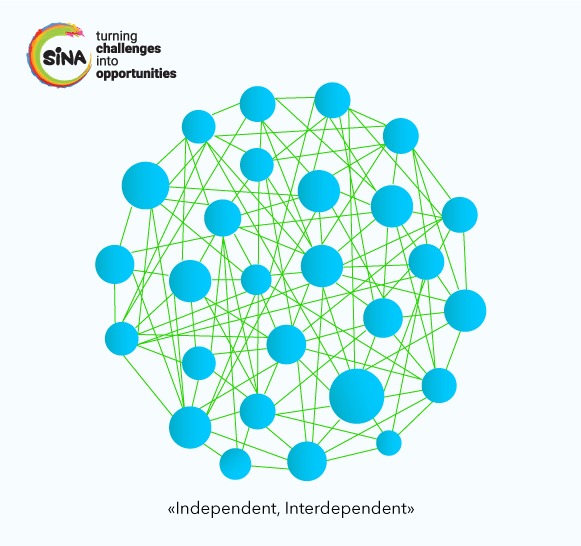
SINA functions as a community ecosystem, where everything is connected and interacts with each other in an interdependent way, achieving a greater outcome than what could be achieved individually. This ecosystem fosters collaborative learning and collective growth, where the success of one is deeply tied to the success of the whole.
Scaling like Nature through Replication
Just as ecosystems expand organically, SINA’s model scales by replicating self-organized communities. Each SINA community operates independently but shares the same core principles, allowing for natural, sustainable growth. This method ensures that new communities can adapt to local needs while remaining aligned with the SINA framework, creating a regenerative cycle of impact that spreads across regions, much like nature’s ecosystems.
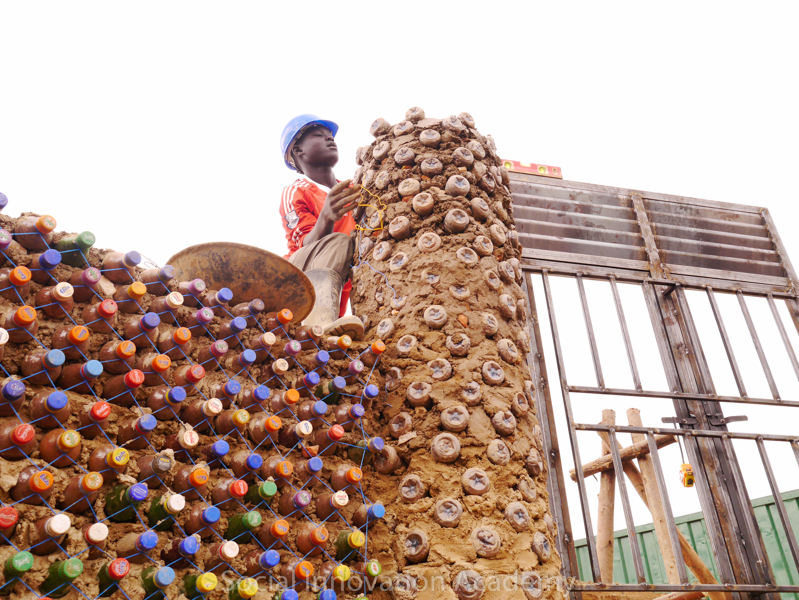
From Marginalization to Empowerment: Transforming Challenges into Social Enterprises
SINA scholars are between 16 and 27 years old and are refugees, orphans, street children, former child soldiers, former inmates, former prostitutes, or young people from other marginalized and poor backgrounds. They have dropped out of school and society has labeled them as useless. Many have started to believe this label. SINA has proven that they can flourish if given responsibilities and a space to unfold. Scholars transform their own personal tragedies into a social enterprise, disrupting the root causes of social problems. The youth does not leave with a certificate, but instead with their own employment.
SINA transforms marginalized youth into social entrepreneurs through a cost-effective and freesponsible community approach. We unleash and nurture the intrinsic drive of our “scholars.” Tailor-made empowerment stages and self-management processes support scholars to define their own path and put the power of education in their own hands. Enabled as changemakers, scholars often turn challenges into opportunities to make a sustainable living out of what they are passionate about.
Details can be accessed in the Scholar Experience Map for an overview or for full details in our Playbook.
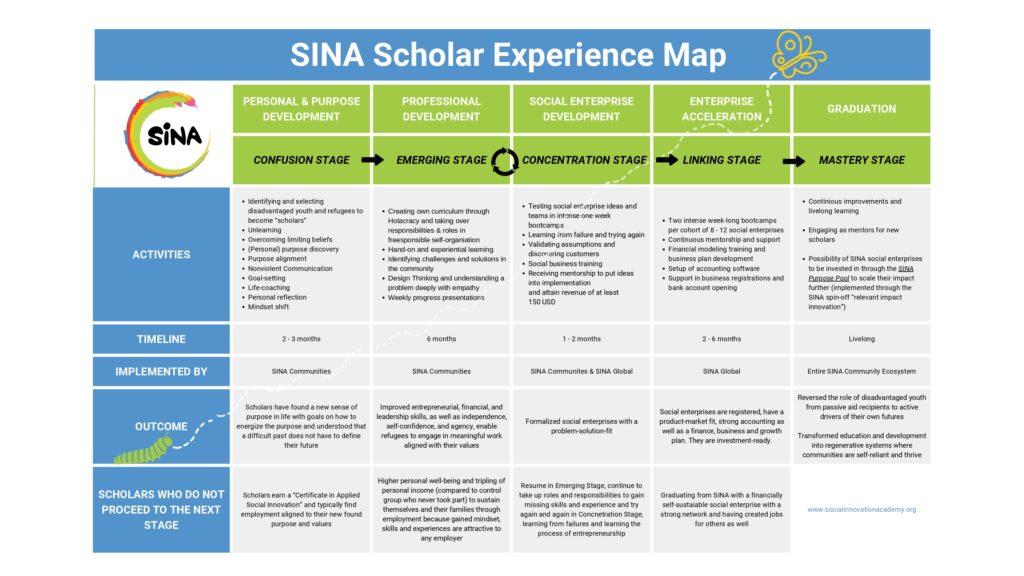
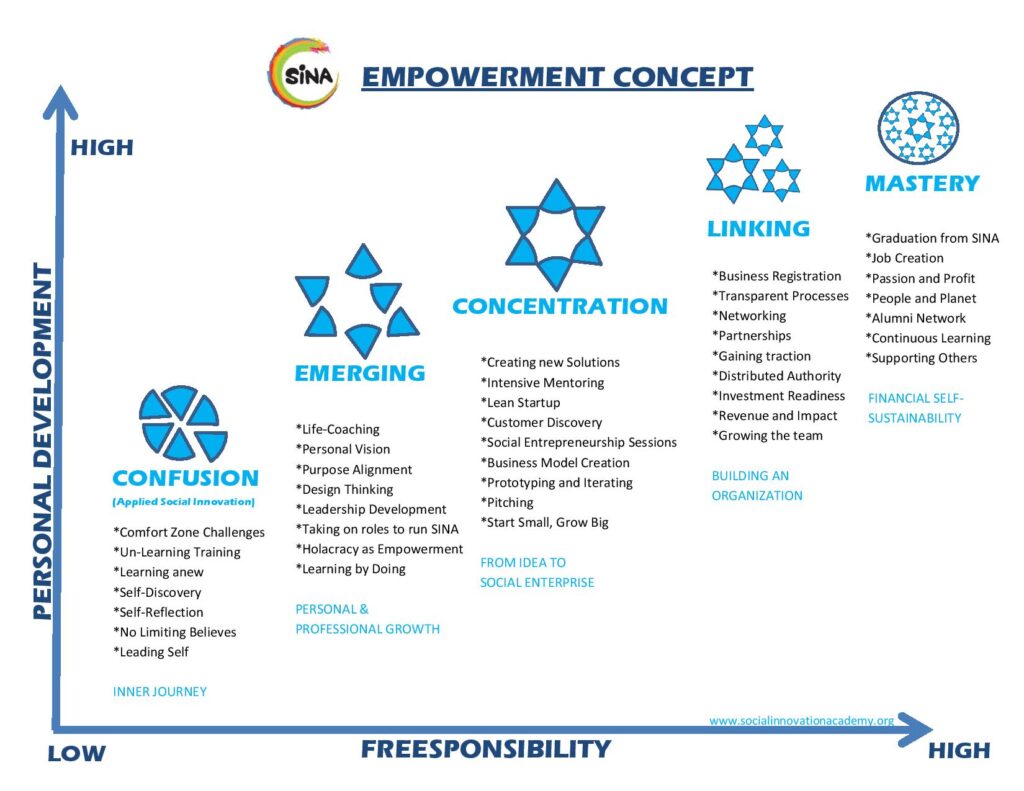
Most scholars do not have prior work experience or degrees but come from vulnerable backgrounds. This is why the initial “Confusion Stage” constitutes an “un-learning” training to overcome limiting believes, unleash potentials and set goals. After, competencies are gained freesponsibly: everyone creates their own curriculum through the roles taken over. The skills and experiences relevant for designing their future lives are acquired, while everyone leads a part of the SINA Community. An individual, for example, is in charge of water in a SINA Community. If no water is available, the role holder will need to solve the problem, create new solutions, potentially plan better for the next month, budget, monitor, evaluate and further her skills. She gains the practical experiences needed to run her own social enterprise in the future and grows on a personal and professional level. Life-Coaching breaks down the individually set goals into actionable steps. Regular training sessions transmit further supportive tools from established to new scholars.
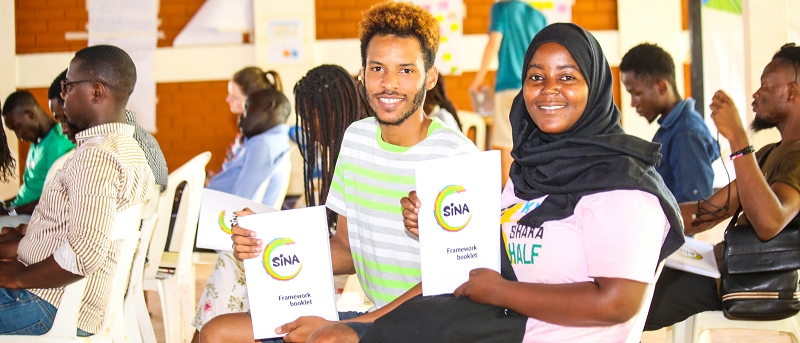
While taking up roles, new ideas and teams form naturally. The difficult backgrounds of SINA members often become the driving force for the creation of social enterprises that tackle its root causes. SINA provides mentoring of the ideation process through Design Thinking, the lean startup approach and customer discovery. The teams take the idea through various iteration cycles in bootcamps until a social business model is validated and traction gained. Enterprises are then incorporated and enter the SINA Acceleration Phase, which supports their growth, the creation of further jobs and the scaling of the social and environmental impact.
The quality lies in the hands-on practical application of skills through self-management. Our five-step empowerment process nurtures personal and professional growth in the following way:
Awards received due to our organizational design and impact:
- ZeroDX Award (2024 & 2025)
- Ockenden International Prize (2023)
- Engagement Preis (2023)
- Tony Hsieh Award (2022)
- Modern Work Award (2022)
- Pan-African Award for Entrepreneurship in Education (2019)
- UNHCR NGO Innovation Award (2018)
Case Studies:
- SINA’s Decolonial Approach to Sustainable Development and Social Entrepreneurship, 2024
- Awarded Ecosystem success Story with SINA by LAP Alliance, 2024
- Corporate Rebels: Empowering Marginalized Youth Through Innovation: The SINA Approach, 2024
- Learning by Founding – Social Entrepreneurship Education for Refugees, FII Institute, 2022
The orphans from the first generation became the mentors and leaders for the next generation, passing on the knowledge, skills, and empowerment they had received. This regenerative cycle is the cornerstone of the SINA Model. Scholars become changemaker-makers, and through replication by its beneficiaries into new locations, the SINA Model addresses educational gaps and youth unemployment at its roots, one community at a time.
Join us
Shape the future and empower Africa’s youth to transform challenges into opportunities, one community at a time.
SINA Global
SINA Global has the purpose of “Regenerative communities in a freesponsible world” and is creating a movement of self-organized and freesponsible learning spaces for systemic change. SINA Global is serving all 20 existing SINA Communities to be able to have the maximum social impact and collectively seeks to change the rules and relationships within the educational system and to distribute authority within local communities to create their own solutions.
Get to know us and our freesponsible and self-organized way of working by checking out our organizational structure
Registered as “SINA (Social Innovation Academy)” in Uganda and Germany, SINA Global operates as a non-profit entity and has three main areas of operations:
SINA Acceleration Program
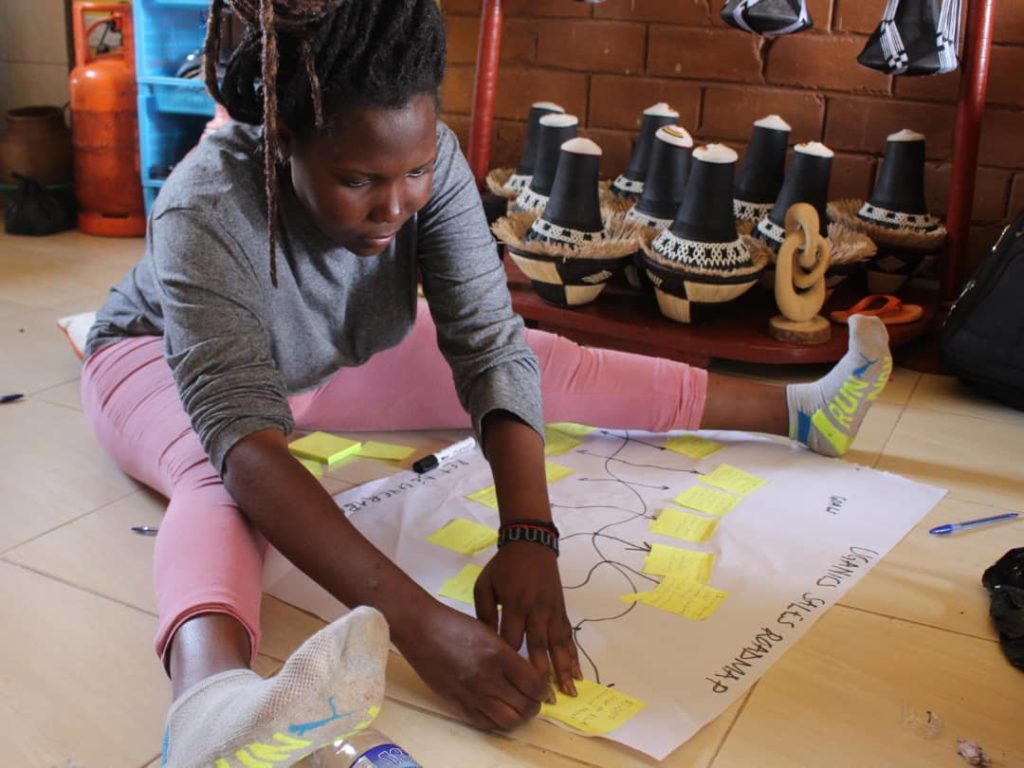
The SINA Accelerator is a six months program that supports social enterprises from all SINA Communities to scale their impact.
SINAs “Community Ecosystem” and Replication
Supporting teams and communities to self-organize and create social enterprises using the SINA Model. We are welcoming new partners and are open to receive youth to go through the SINA Model first and, be equipped with the skills to create their own SINA and to work together to set up a new SINA Community.
SINA Purpose Pool
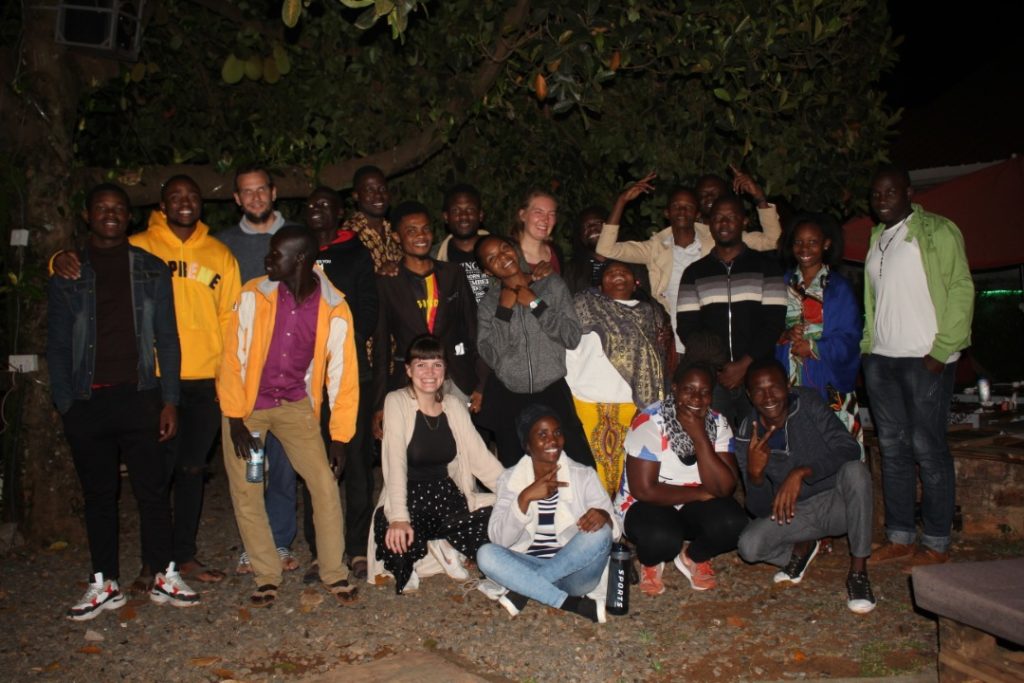
The Purpose Pool is an innovative funding mechanism that harnesses the power of community to mobilise investment capital for the most impactful entrepreneurs in underserved markets.