
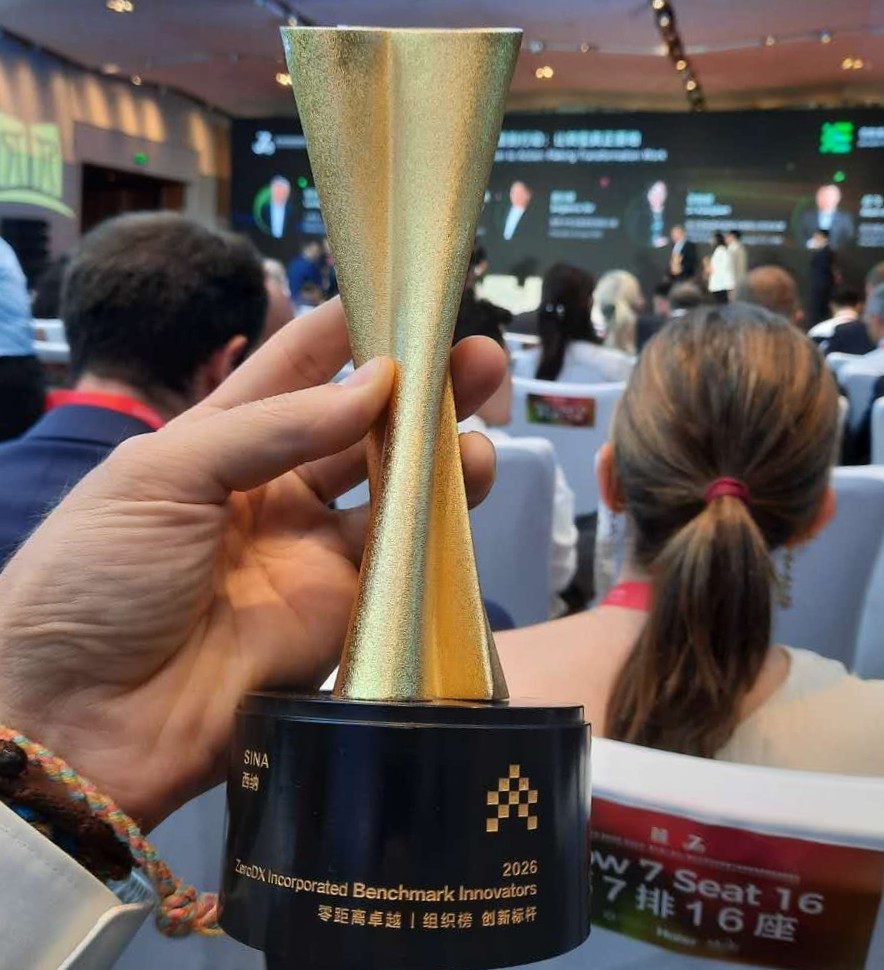
SINA has won the ZeroDX Award for the third consecutive year, receiving the Benchmark Innovators recognition at the 2026 ceremony in Qingdao, China, on September 21. Uganics, the Ugandan social enterprise founded by SINA alumna Joan Nalubega, won in the Emergent Excellence category.
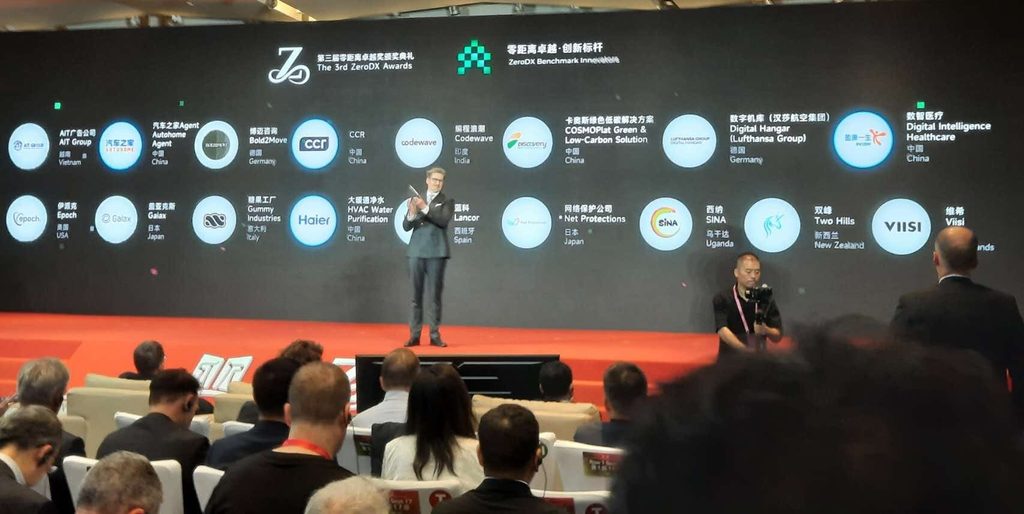
Ten social enterprises from our ecosystem were nominated this year. For us at SINA, Uganics’ recognition is a particular reason to celebrate. Joan started the social enterprise while at SINA in 2016, and the responsibility she experienced here has helped shape how she runs it. Corporate Rebels, which researched and submitted the nominations, documented what that looks like when a decision goes wrong.
After visiting a manufacturer in Germany, Joan brought home an idea for equipment to cut soap. Her production team and Operations Manager preferred a different design, developed with a local fabricator. The decision fell within their responsibilities, so she let it stand. The machine damaged the soap and broke its own knives. The company had spent significant money building it.
Joan did not take the decision back. The team researched alternatives and visited other factories, eventually developing equipment that processes more product than the German design she had proposed. They remained responsible through the failure and its repair. That is a demanding form of trust. That is a demanding form of trust. The financial loss was real, but the team kept the opportunity to develop its own judgment. Had Joan stepped in and solved the problem herself, the machine might still have been fixed, but the people responsible would have lost the chance to work out how.
Uganics makes mosquito-repellent soaps and other household products, with higher-margin sales to tourism businesses and wealthier customers helping keep products affordable for low-income families where the soap is needed the most to fight against Malaria. Listening to those families has changed the products themselves. When mothers liked a mosquito-repellent petroleum jelly but could not afford a 100-gram container, the team introduced a 30-gram version.
These decisions help explain the connection between the two awards. Within our 24 SINA Communities, young people take responsibility for work that others depend on. A scholar manages the food budget. Another handles procurement and has to account for a missing receipt. The community feels the consequences when something goes wrong.
For young people accustomed to being treated as recipients of aid or excluded by formal education, having that authority can be unfamiliar. We call the relationship between freedom and responsibility “freesponsibility.” It requires clear roles and access to information, with room to develop judgment through doing the work. The question is whether people become more capable of making decisions themselves.
Uganics has taken that practice into its own circumstances. Joan describes a gradual shift away from a business where employees waited for her approval. Today, she can go months without visiting the factory while the team adjusts production and improves processes. Strategy and major financial commitments still depend on her. Sharing responsibility remains work in progress.
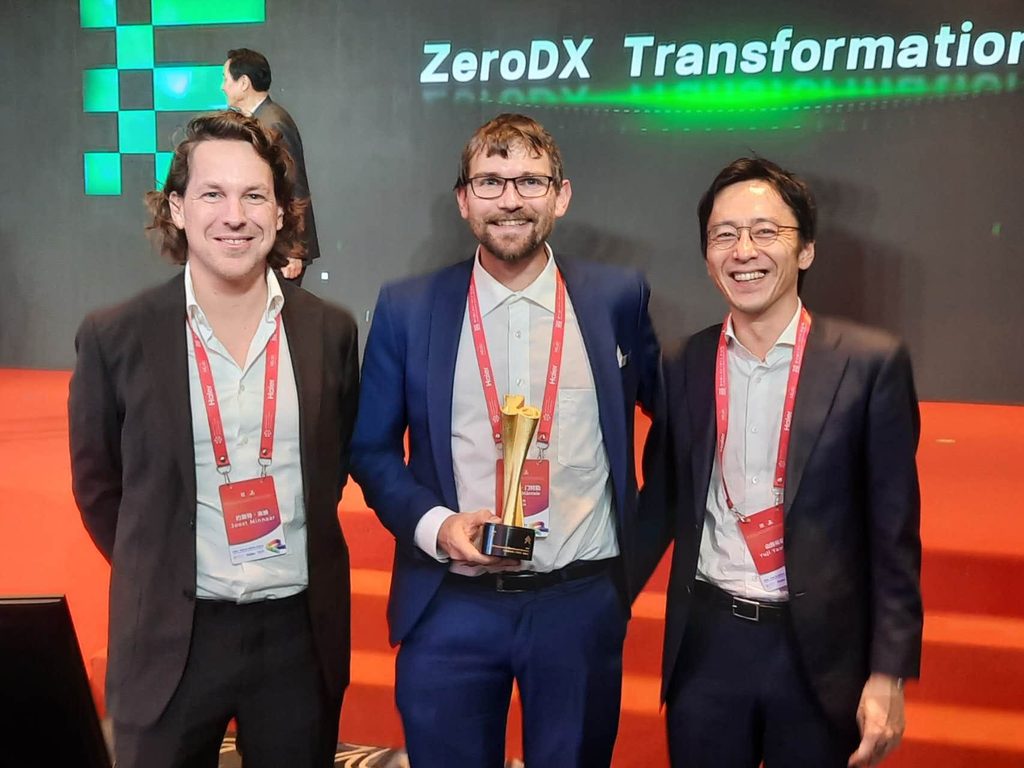
SINA co-founder Philipp Mäntele travelled to Qingdao in China to accept the award on SINA’a behalf. Unfortunately, visa difficulties prevented participants from Uganda from attending.
The ZeroDX Awards were introduced by the Business Ecosystem Alliance and draw on Haier’s concept of “Zero Distance,” reducing the separation between an organisation and the people it serves. The Benchmark Innovators category recognises organisations establishing examples of how management can work differently. Emergent Excellence honours organisations developing and putting such changes into practice.
Our first award and visit to Haier in 2024 prompted further examination of our own approach. SINA already distributed authority, but we began asking more closely whom each role served and how its contribution could be assessed. That learning continues as we develop ways to earn income while remaining accountable to the communities for whom the work exists.
For Philipp, this year’s gathering also connected to a book he is writing, drawing on twelve years of experience with SINA. It explores how work can develop people’s capacity to contribute, and how organisations can get in the way. Meeting others working through similar questions offered an opportunity to challenge and deepen that thinking.
Congratulations to the whole Uganics team, and to everyone across our SINA Communities whose daily work has earned this recognition for the third year running.