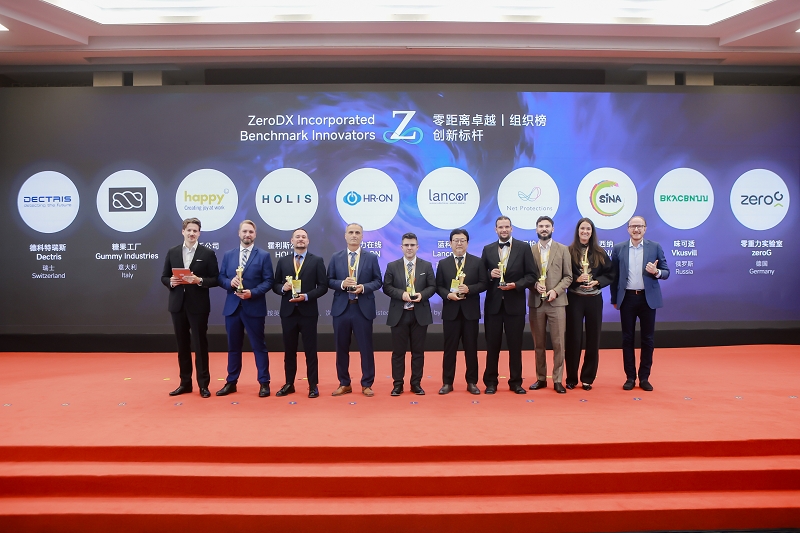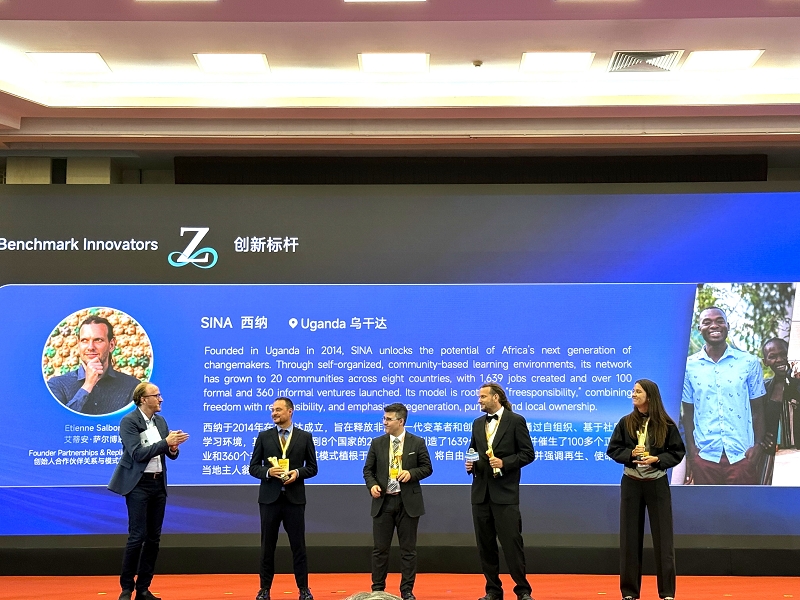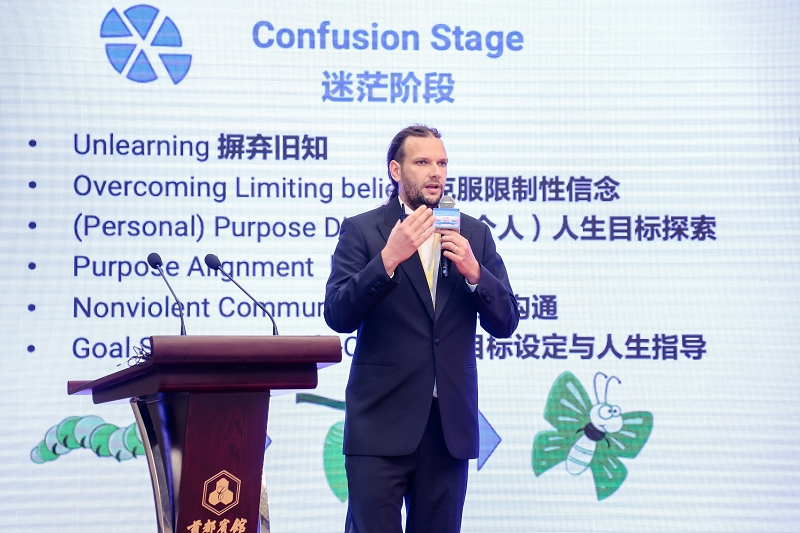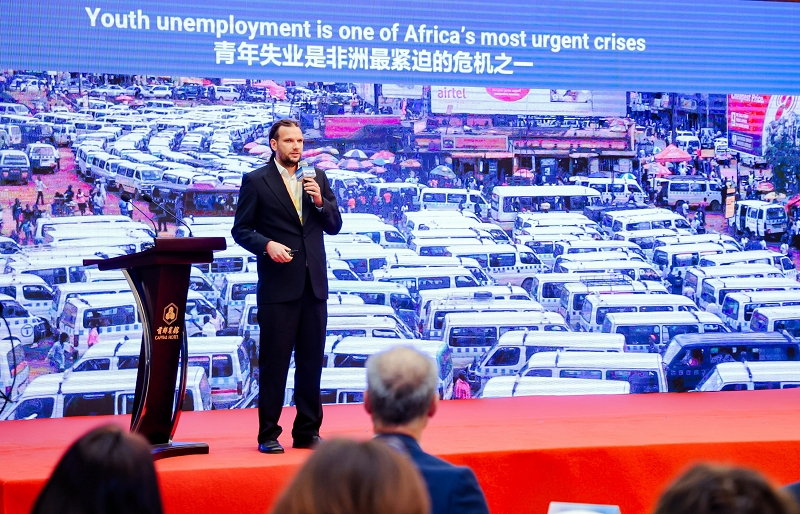
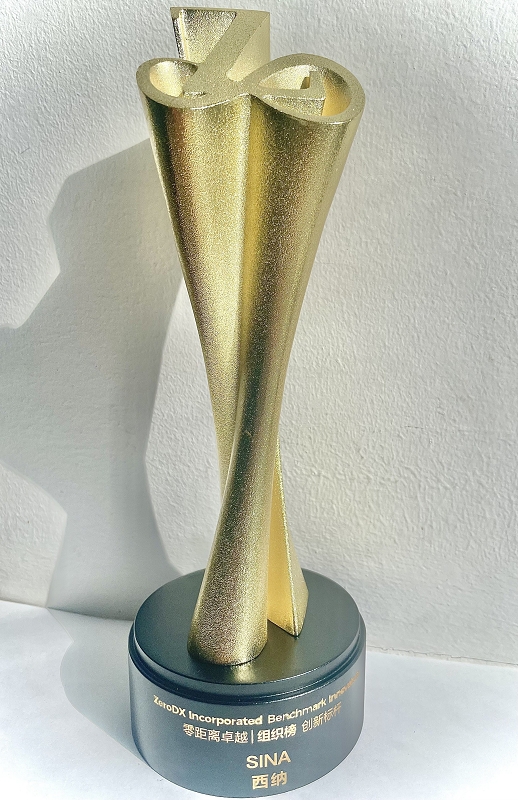
SINA (Social Innovation Academy) has been awarded the ZeroDX (Zero Distance Excellence) Award for 2025, marking the organisation’s second consecutive win in the category of “Benchmark Innovators”. Etienne Salborn was invited to Beijing, China to present SINA and to accept the award in person at the RenDanHeYi Forum & Second Zero Distance Excellence Award Ceremony.
The ZeroDX Awards are organized and hosted by
- HMI — Haier Group’s think tank that researches and promotes the RenDanHeYi model through open, practice-grounded management innovation.
- Business Ecosystem Alliance (BEA) — A global community linking researchers and practitioners to advance ecosystem-based organizing and share evidence, tools, and cases.
- Management Lab (MLab) — Founded in 2009 by Gary Hamel, Michele Zanini, and Polly LaBarre to reinvent management with open platforms and methods that reduce bureaucracy and boost adaptability.
Together they search for and recognise organisations that best embody the principle of “zero distance” and eliminate distance between an organisation and its users (customers, beneficiaries, the communities it serves) while fostering self‑organised, responsive, value‑creating ecosystems.
Winning last year at the 2024 inaugural ZeroDX Awards was a big deal for SINA. This is our second consecutive ZeroDX Award. This year’s recognition shows the consistency of the SINA Framework that keeps narrowing the gap between intention and real-world outcomes.
The ZeroDX community traces its roots to the RenDanHeYi management philosophy pioneered by Haier: distribute authority, organize work as entrepreneurial micro-entreprises, and connect every role directly to users to generate value without friction. That worldview mirrors SINA’s “freesponsible” framework where freedom and responsibility go together and where scholars co-own roles, decisions and results in living learning communities.
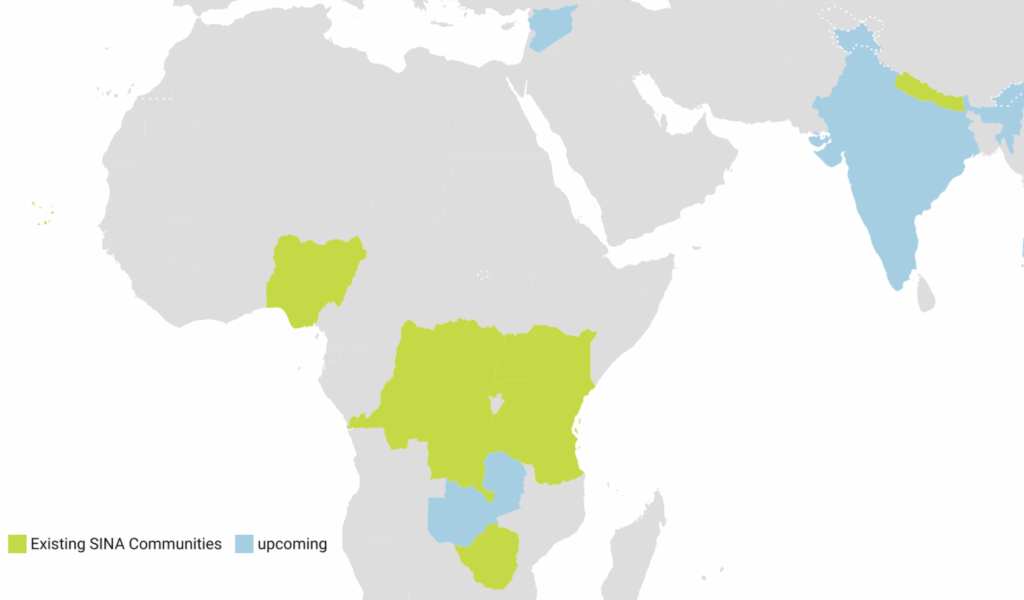
At SINA, zero distance means the beneficiary become the change she wants to see. She is the designer and the doer. Young people—many of them refugees or from marginalized backgrounds—enter a five-stage empowerment process, take on real roles that run their SINA community, and translate lived challenges into social enterprises that tackle root causes locally. There is no hand-off between “program” and “practice” because learning, governance and social enterprise creation happen in the same place, with the same people, through distributed authority. This is why our scholars leave without a certificate and with their own employment and social enterprises, and why replication is organic: communities adopt the SINA Framework and run it themselves as part of a wider, interdependent ecosystem in currently 23 locations in nine countries.
RenDanHeYi talks about eliminating boundaries to innovation by putting micro-enterprises close to users. SINA lives this daily. A scholar might hold the finance role in the organization in the morning, facilitate a community mediation in the afternoon, and iterate a product with local customers by evening. The same feedback loops that power Haier’s zero-distance model power our communities: short cycles, local ownership, transparent rules, and decisions made by the people doing the work.
We are grateful and the award is dedicated and a celebration to everyone who makes zero distance real every day: SINA scholars, partners and alumni, social enterprises and supporters. Thank you!
Some impressions from Beijing: